


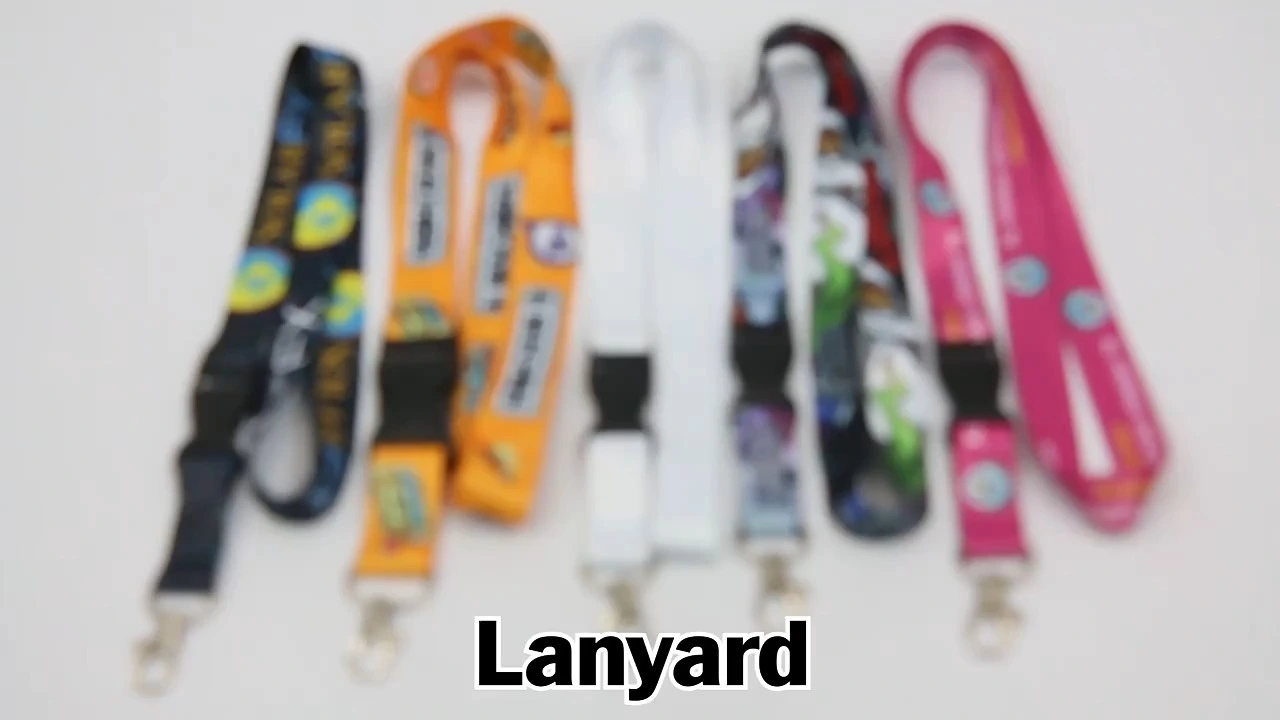
Wholesale Custom Neck Lanyard ID Badge Strap
Lanyards are versatile accessories designed to securely hold IDs, keys, or badges around the neck. Often made of durable materials like nylon or polyester, they feature adjustable lengths and can be customized with prints or logos for practicality and personal style.
5.0
Material:
Polyester
Color:
Full color
Resolution:
1000-1440dpi
Printing Method:
Dye sublimation printing
Usage time:
1-3 years
File format:
AI、PDF 、ESP、PSD、TIFF、JPG.
Price:
Send an inquiry to obtain a better quote
design customization
Please fill out the form below to request a quote or to request more information about us. Please be sure to upload customized requirement documents or pictures, and we will get back to you as soon as possible with a response. we're ready to start working on your new project, contact us now to get started.
Please fill out the form below to request a quote or to request more information about us. please be as detailed as possible in your message, and we will get back to you as soon as possible with a response. we're ready to start working on your new project, contact us now to get started.
1.Product display
Ribbon Wristband
Silicone Wristband
Landyard
Silicone Keychain
Baseball Cap
Canvas Bag
Bandana
Custom Apron
Umbrella
Athlete's T-Shirt
Drawstring Bag
Cup Cover
2.Product detail
Product Display
FAQ
1
What materials are lanyards typically made of ?
Lanyards are commonly made from materials like nylon, polyester, cotton, silk, neoprene, or microfiber. Synthetic materials (nylon/polyester) are popular for durability and cost-effectiveness, while cotton or silk offer a softer feel. Neoprene is used for waterproof or padded designs.
2
What are the main uses of lanyards ?
Lanyards are widely used to hold identification badges, keys, access cards, USB drives, or small tools. They’re popular in offices, schools, conferences, events, hospitals, and industries where easy access to credentials is essential. Some also use decorative lanyards as fashion accessories.
3
Can lanyards be customized with logos or designs ?
Yes, lanyards are highly customizable. Customization options include printing logos, text, or graphics using screen printing, sublimation, or heat transfer. You can also choose from various colors, widths, attachment types (clips, hooks, J-hooks), and safety features (breakaway clasps).
4
How do I clean and maintain a lanyard ?
Most lanyards can be hand-washed with mild soap and water, then air-dried. Avoid machine washing or high heat, which may shrink or fade materials. For synthetic lanyards, spot-cleaning is often sufficient. Check the care label for material-specific instructions (e.g., neoprene may require gentle scrubbing).
5
What safety features should I consider when buying a lanyard ?
Prioritize lanyards with breakaway clasps (quick-release buckles) to prevent choking hazards, especially in busy environments or for children. Reflective materials are ideal for visibility in low-light settings, and flame-retardant fabrics may be necessary for industrial use. Ensure attachments are secure to prevent dropping items.
{{item.score}} Stars
{{item.pre}}%
{{item.nickname ? (item.nickname.slice(0, 2) + '*****') : item.source === 1 ? 'mall buyer' : '--'}}
{{item.comment_time}}
Review in the {{item.country}}
{{itemAttr.params_key}}: {{itemAttr.params_value}}
Get in touch with us
just leave your email or phone number in the contact form so we can send you a free quote for our wide range of designs
Related Products
Better quality better service
FOLLOW US
We're here to help!
+86 18217507080